


Vivid Seats | Event Tickets
Vivid Seats
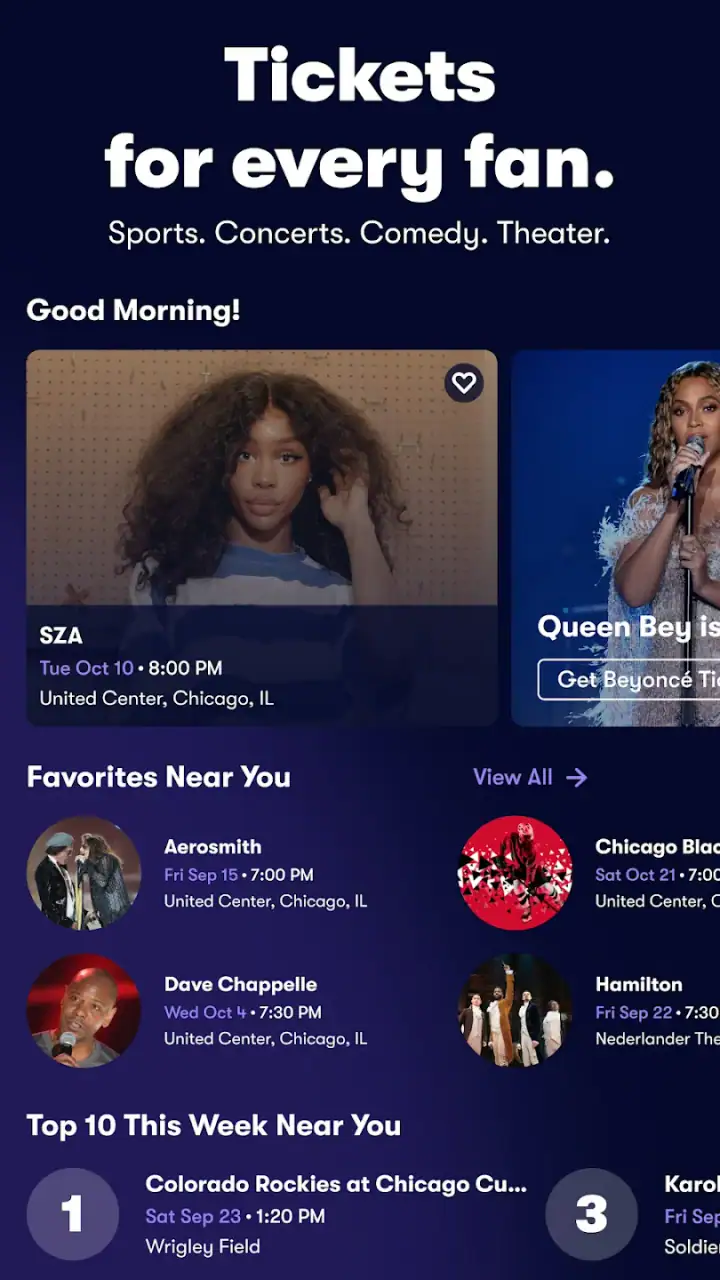
Buying an event ticket on a phone sounds simple until a good seat disappears while a screen is loading, a listing looks different from what you expected, or the final checkout step feels less clear than the first one. I spent time using Vivid Seats as an event-ticket marketplace, paying attention not only to browsing concerts, sports, and theater, but also to the small points where a normal purchase can become confusing. My overall impression is positive: it is convenient for comparing available tickets in one place, but it rewards careful checking rather than rushed tapping.
The app is free, developed by Vivid Seats, and aimed at general users with an Everyone content rating. It has built a substantial audience, with over five million installs, around thirty thousand ratings, and a 4.7 average. Those figures suggest that many people find the service useful, although popularity does not remove the need to inspect each listing carefully. Ticket marketplaces can vary from event to event, so the best experience comes from treating every purchase as a decision that deserves a minute of attention.
Where ticket buyers usually get stuck
The first difficulty is often not finding an event but deciding what a listing really offers. A search may show several prices and seating choices, yet the cheapest option is not automatically the best value. I found it more helpful to compare the section, row information, ticket quantity, and delivery details together instead of sorting by price alone. A slightly higher listing can make more sense if its location is clearer or if it better matches the way I want to attend.
This matters especially when buying for a group. If I need several seats together, I would rather begin with the required quantity and then compare the available locations than choose one attractive seat and discover that the remaining seats are separated. For a solo attendee, flexibility can open more choices. For a family or group of friends, the seating arrangement is usually more important than saving a small amount on the first result.
Another common sticking point is the difference between browsing and committing. Looking at an event is low pressure; completing a ticket order is not. Before moving forward, I would confirm the event name, venue, date, seat description, and number of tickets. I also keep the event page open while reviewing the order details, because switching rapidly between searches can make it easy to confuse two similar listings.
Related News

Instagram Is No Longer a Photo App. It Is an Attention Engine

Microsoft Teams Mobile: When Collaboration Becomes Navigation

How the NFL App Adapts to Android and iOS Updates

Temu: Elevate Your Shopping Experience to Billionaire Status

Why Traffic Rider Works Best as a Precision Reflex Game

How Google’s Find Hub Transforms Everyday Searches
The most useful habit is to slow down at the final review stage. A fast checkout is convenient, but a careful checkout is safer. I do not rely on the thumbnail map alone. I read the written seat information and check whether the listing matches the experience I want, particularly for theater performances where the viewing angle can matter as much as the section name.
Why a listing may feel different from a venue box office
Vivid Seats is useful because it brings ticket availability into a marketplace-style app rather than limiting me to one venue’s own sales page. That convenience also means the presentation may not feel identical to buying directly from an organizer or box office. Direct sellers can be the better choice when I already know the official source, want the simplest path for a standard sale, or need information that only the event organizer controls.
The marketplace approach becomes more valuable when I am comparing options, looking for a sold-out event, or trying to understand the range of seats that people are offering. I would not treat it as a universal replacement for official event channels. Instead, I see it as a practical second place to check, especially when convenience and choice matter more than having a single direct-sales relationship.
Gallery
Setup checks that prevent avoidable problems
The application was released on May 28, 2015, and the current version is 2025.119.0. On Android, it requires version 8.0 or later. Before blaming the app for a loading or checkout problem, I would first check that the device meets that requirement and that the application is updated through the normal app store. An older operating system or an outdated installation can create trouble that looks like a ticketing failure.
I also recommend checking the basics before an important purchase: stable internet access, enough battery, and a little free storage for normal app operation. If a page remains blank, I would move from a weak mobile signal to a reliable Wi-Fi connection, then close and reopen the app. These are simple steps, but ticket availability can change while a device is struggling to refresh, so I prefer fixing the connection before repeatedly pressing buttons.
Account preparation can make the process less stressful. I would sign in before searching for a high-demand event, rather than waiting until the last screen. I also make sure my contact details are current and that I can access the email account associated with the purchase. This does not guarantee a smoother transaction, but it reduces the chance of losing time when the app needs information during checkout.
For phone settings, I keep notifications available if I am waiting for an order update, while avoiding unnecessary interruptions during browsing. I also check that the device’s date and time are set correctly. That sounds unrelated to tickets, but an incorrect device clock can make time-sensitive screens feel inconsistent. If the app behaves strangely after a system change, restarting the phone is a sensible first test before reinstalling anything.
How I prepare before searching
I begin with a clear plan: the event I want, the acceptable date if there are alternatives, the number of seats, and the maximum total I am comfortable considering. I do not enter the search without knowing those boundaries. Otherwise, an attractive listing can pull me toward a purchase that does not suit my budget, schedule, or seating needs.
For concerts, I decide whether I care most about being close to the stage, having a broad view, or keeping the cost down. For sports, I think about whether I want a central view or simply a seat inside the venue. For theater, I pay closer attention to the relationship between the section and the stage. This preparation turns the app from a stream of tempting listings into a comparison tool.
One practical tip is to take a mental snapshot of the listing before changing filters. I note the section and row, then compare the next result against it. That avoids a common mistake: assuming that a newly displayed price belongs to the same seats as the previous one. When I am buying more than one ticket, I also verify the quantity again after every major search change.
Recovering when a search or purchase goes wrong
If a search does not load properly, I avoid repeating the same action over and over. I first check the connection, then return to the event search and try again with fewer filters. If the broad search works, I add the filters back one at a time. This helps identify whether the problem is the network, the app session, or an overly narrow combination of choices.
When a listing disappears, I do not assume that the entire event is unavailable. Ticket inventory can change independently of the app’s basic operation. I refresh the event, widen the seating preferences, and compare the remaining options. If I was searching for a very specific section, I decide whether that preference is essential or whether another area would still make the event worthwhile.
A stalled checkout deserves more caution. I would not immediately submit the order again, because repeated taps can create uncertainty about whether the first attempt went through. Instead, I check for an order confirmation, an account update, or a message in the email account connected to the purchase. If there is no clear result, I restart the app and review the account before trying again. The goal is to establish the transaction status first, not to create a second possible order.
If the app closes unexpectedly, I reopen it and return to the event rather than assuming the previous screen is still current. I would also check whether the device has pending system updates or whether other apps are consuming unusual resources. Clearing temporary app data or reinstalling can be a later step, but I would only use it after confirming that I can sign in again and still access the necessary account information.
What to do when the problem is outside the app
Not every disappointing ticket experience is caused by Vivid Seats. A venue can change event details, an organizer can alter timing, and a network provider can interrupt a connection. If the event information itself appears inconsistent, I compare it with the venue or organizer’s official communication rather than relying on a marketplace screen alone. That is particularly important when travel, childcare, or a strict schedule is involved.
Payment issues can also come from the bank or card issuer. A declined transaction may reflect a security check, an incorrect billing detail, or a temporary authorization problem rather than a fault inside the app. I would verify the payment information carefully and check with the card provider if the same method fails elsewhere. I avoid switching rapidly among several payment attempts because that can make the final status harder to understand.
Device behavior is another outside factor. A full phone, unstable connection, aggressive battery-saving setting, or outdated operating system can interfere with normal app use. Testing the same account after improving those conditions is more informative than immediately concluding that the ticket marketplace is broken. If the issue remains specific to an order, I would use the app’s available support route and keep the event details and transaction information ready.
Who should use it and who may prefer another route
I think Vivid Seats suits people who want to browse event choices from a phone and compare seats without visiting several separate pages. It is especially handy when plans are still flexible, when I am looking across concerts, sports, and theater, or when I want a clearer sense of the available marketplace before deciding. The free download also makes it easy to keep as a research tool even if I do not buy immediately.
It is less suitable for someone who dislikes comparing listings or who wants every detail to follow the same straightforward pattern as a direct box-office purchase. If I already have a trusted official ticket source for the exact event, that route may be simpler. I would also hesitate to use any marketplace as my only source when the event has unusual entry rules, changing schedules, or highly specific seating requirements that need confirmation from the organizer.
For occasional buyers, the main learning curve is not technical. It is understanding that the app presents choices that still need judgment. For frequent event-goers, the benefit is speed once a personal routine is established: search broadly, set the quantity, compare the written seat details, review the order carefully, and confirm the transaction before repeating any action.
A realistic everyday example
Imagine that I decide on a Friday afternoon to take two friends to a weekend concert. I open the app, search for the event, and set the quantity before getting attached to a particular seat. I compare several sections, reject one listing because the view does not suit us, and keep another because the seats are together and the description is clearer. Before paying, I check the event details again and make sure I have not confused the concert with another date.
If the first listing vanishes, I do not panic or repeatedly refresh. I return to the broader results, decide whether the next section is acceptable, and only then continue. If checkout appears to freeze, I look for confirmation before starting over. That workflow is less exciting than grabbing the first bargain, but it protects the part of the experience that matters most: arriving with the right tickets and realistic expectations.
My practical verdict after using the app
Vivid Seats is a capable event app with a clear purpose and a large enough user base to feel established. Its strongest quality is convenience: I can explore ticket choices for concerts, sports, and theater from one mobile experience instead of beginning every search from scratch. The 4.7 average from around thirty thousand ratings supports my impression that the basic experience works well for many people.
My reservations are mostly about marketplace discipline rather than the app’s core idea. A low price can distract from seat location, quantity, or the details that make one listing preferable to another. A loading problem can also be mistaken for a sold-out event, while an unclear checkout state can tempt users to submit the same order twice. These are manageable issues, but they require attention.
I would recommend it to a friend who wants a convenient way to compare event tickets and is willing to read listings carefully. I would pair it with official event information when the schedule or entry conditions matter, and I would choose a direct box-office option when simplicity is more important than marketplace choice. In short, this is a useful tool for informed ticket shopping, not a reason to stop checking the details that determine whether a night out actually goes as planned.
FAQs for Vivid Seats | Event Tickets
What is Vivid Seats and how does it work?
Vivid Seats is an online marketplace where users can buy and sell tickets to live events, including concerts, sports games, and theater performances. The platform connects buyers with sellers, providing a secure environment for transactions. Users can browse events, select seats, and purchase tickets directly through the app or website.
Is using Vivid Seats safe and secure?
Yes, Vivid Seats prioritizes user security and offers a 100% Buyer Guarantee. This ensures that tickets are valid and will arrive on time. The platform uses secure payment systems and encryption technology to protect personal and financial information, making it a reliable choice for purchasing event tickets.
Can I sell my event tickets on Vivid Seats?
Absolutely! Vivid Seats allows users to list their tickets for sale. Sellers can set their own prices and manage their listings directly through the app. Once your tickets sell, Vivid Seats provides guidance on transferring the tickets to the buyer and ensures you receive payment securely.
What fees are associated with buying tickets on Vivid Seats?
When purchasing tickets, Vivid Seats includes a service fee, which covers the cost of providing a secure platform and customer support. This fee is added during the checkout process, so users should review the total cost before completing their purchase. The service fee varies depending on the event and ticket price.
How do I contact Vivid Seats customer support if I have an issue?
Vivid Seats offers multiple customer support channels. Users can contact support via phone, email, or live chat directly through the app or website. The support team is available to assist with any concerns, whether it's about ticket delivery, event cancellations, or other inquiries. Response times are typically quick, ensuring timely assistance.
Pros
- User-friendly interface for ticket browsing.
- Wide range of events available globally.
- Secure payment options for peace of mind.
- Offers price alerts for budget tracking.
- Mobile ticketing for convenience.
Cons
- Service fees can be quite high.
- No refunds on ticket purchases.
- Limited customer support options.
- Occasional delays in ticket delivery.
- App requires strong internet connection.


